


Wearables: Helpful Health Tool or Source of Extra Stress?

Updated: Jul 3
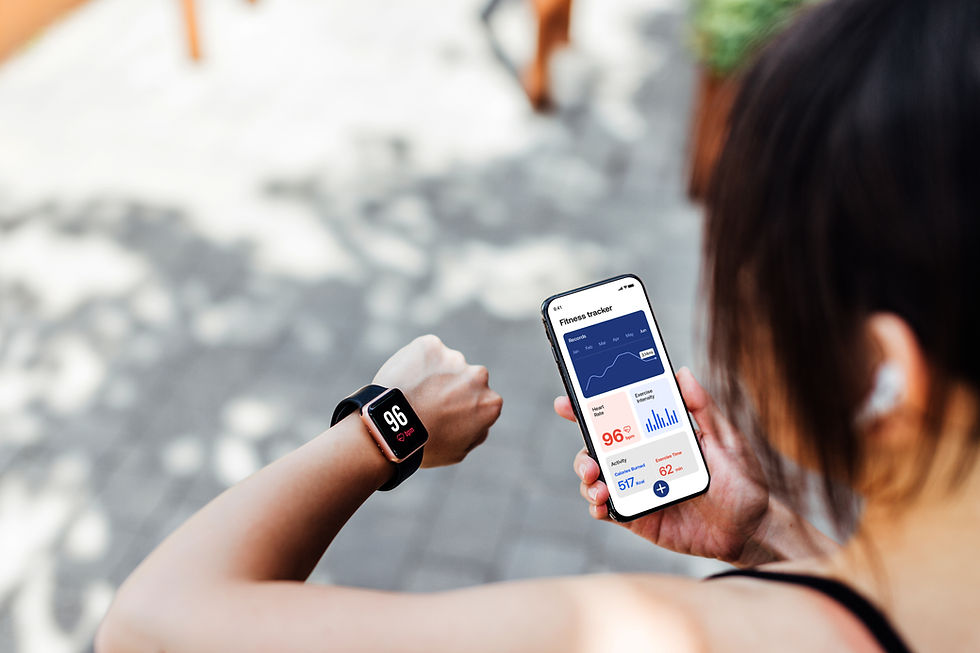
As a Sydney chiropractor and remedial massage therapist, I often get asked about wearables or get some interesting insights from clients— Oura rings, Whoop, Apple Watches, Fitbits… the list keeps growing.
Clients want to know if they’re worth it, especially when they’re trying to stay active, recover from injury, or simply feel better day to day.
My honest answer is mixed. They can be genuinely useful, but they can also create unnecessary worry if we’re not careful. (I’ve seen this both with clients and in my own postpartum recovery while managing Graves’ disease.)
The Real Benefits
The biggest value comes from establishing your personal baseline and tracking trends over time.
Consistent data on resting heart rate, sleep patterns, or daily movement gives helpful context when we’re working on rehab goals together. Seeing improved recovery scores alongside better neck, shoulder, or hip mobility can be motivating and help us fine-tune your chiropractic and massage care plan.
They also gently encourage more movement — and movement is medicine.
When Wearables Become a Problem
On the flip side, I’ve seen them fuel anxiety in several ways. One client experienced consistent low blood oxygen readings at night, causing justifiable worry. After proper medical investigation, everything was completely normal — the device was simply inaccurate for her. Lower-than-expected REM sleep or possible sleep apnea flags can trigger real concern. Many people also get anxious when their watch shows them spending time in higher heart rate zones. They worry they’re not fit enough or that something is wrong because they can’t keep their heart rate lower.

Even in group settings, wearables can disrupt flow. I’ve heard stories of entire gym classes having to restart a set because one person’s watch didn’t start tracking properly — pulling everyone out of the moment and turning movement into data management.
While devices can highlight patterns, they are not diagnostic tools. Mass data collection and algorithms often don’t account enough for normal human variance — age, hormones, life stage (including postpartum), fitness level, or even how you breathe at night. What looks “abnormal” on the graph can be completely fine for you.
The same thing happens with exercise. In reality, that high heart rate zone might be perfectly normal for your body during certain activities — especially if you’re strong, carrying extra load (hello, busy midlife with or without kids and work!). The number doesn’t always match how you feel or your actual capacity
My Approach in Practice
I encourage patients to treat wearables as one helpful data point, not the full picture. Here’s what works well:
• Use them for trends and baselines rather than obsessing over daily numbers.
• Always cross-check with how your body actually feels and moves.
• Bring your insights into the clinic — I love combining wearable data with objective testing (like VALD DynaMo strength and movement measures) to create smarter, personalised rehab and maintenance programs.
Remember: your body is incredibly intelligent. Trust its signals alongside the numbers.
Final Thought
Wearables can support better awareness and consistency with movement and recovery — both central to long-term wellbeing and chiropractic care. But they should never replace your own intuition or create new fear around your health.
Important note: Wearables are not medical devices. Please see your GP or specialist for any health concerns.
If you’re dealing with stiffness, recovery challenges, sleep concerns, or simply want to move and feel better with confidence, I’d love to help you cut through the noise and focus on what actually works for your body. Feel free to mention your wearable data when you book.
Have you had a love/hate relationship with wearables? Drop a comment below — I read them all


Comments